Separate the fiber from the fabric
Linen is made from flax, but the fiber name describes only part of a finished textile. Yarn thickness, weave density, fabric weight, dyes and finishing treatments all change its behavior. A loosely woven curtain and a dense tablecloth can both be linen while feeling very different in use. Even the familiar slub is not, by itself, evidence of strength or quality.
Start with the job. A curtain must manage light and privacy. Bedding needs a comfortable hand and a washing routine you can sustain. Upholstery must withstand repeated friction and meet applicable safety requirements. Do not assume that attractive curtain cloth is suitable for covering a chair.
Look at light, drape and contact
Order a swatch when possible. Hold it against a window, lay it over a chair edge and look at it beside the room’s existing wood and wall finish. Assess privacy after dark with the interior lights on: a cloth that feels private by day may reveal silhouettes at night. Open weaves may snag around pets, jewelry or rough furniture edges.
For curtains, consider the complete assembly, including lining, heading and hardware. Lining can change both the fall and maintenance requirements. For cushion covers, inspect seams, fastenings and whether the cover can actually be removed. A replaceable zip and generous seam allowances can matter more than a fashionable washed appearance.
Make care part of the specification
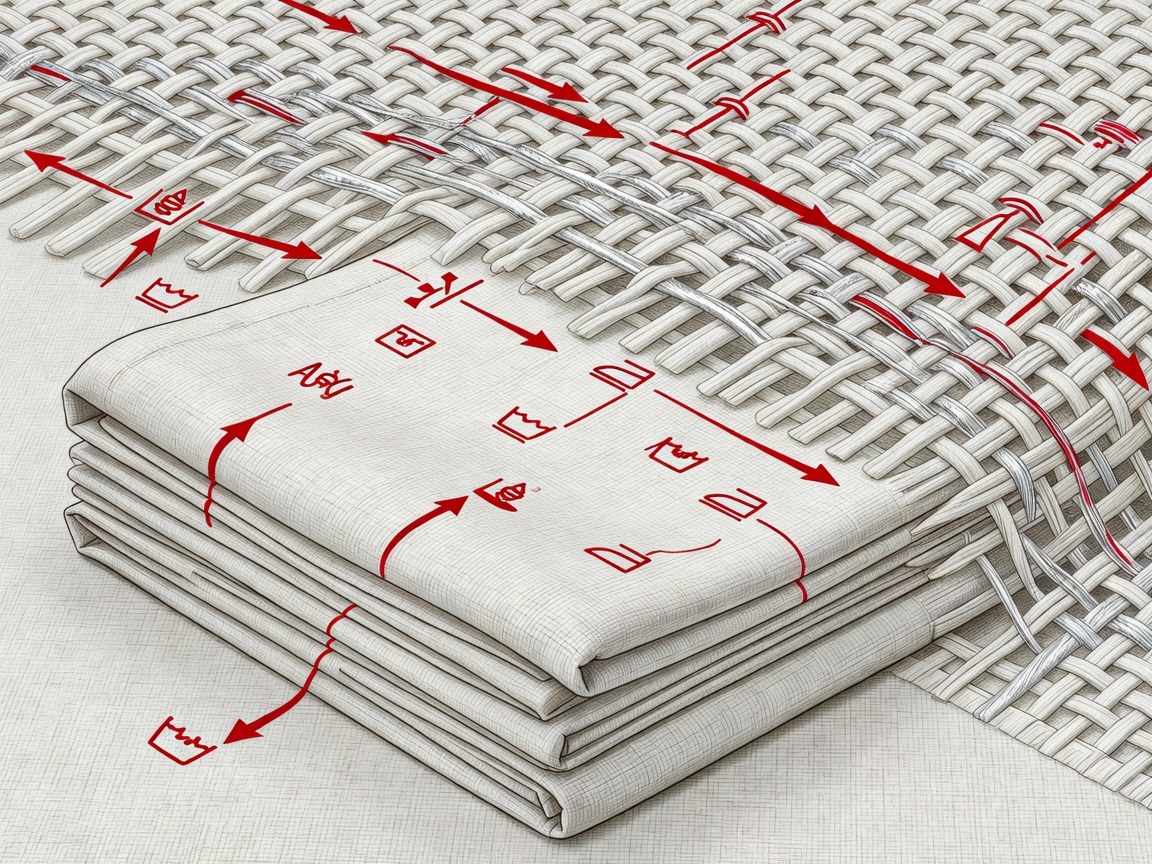
Follow the product’s care label rather than a general rule for the fiber. Blends, dyes, linings and finishes can limit washing temperature or drying methods. If the maker permits it, wash a measured swatch before committing to a length of fabric. Recheck its dimensions, texture and color once fully dry. Prewashing may be appropriate before sewing, but confirm this with the supplier.
Allow practical access for taking curtains down. Rotate frequently used cushions and repair small seam openings before they spread. Avoid routinely overloading a washing machine: poor rinsing and excessive friction can undermine the care you intended. Creasing is a normal part of linen’s appearance; whether to press it is a preference, not a measure of cleanliness.
| Use | Check before choosing | Ongoing attention |
|---|---|---|
| Curtains | Shrinkage guidance, lining compatibility, privacy | Dust gently; clean according to all component labels |
| Table linen | Stain-care instructions and colorfastness | Attend to spills promptly using approved methods |
| Cushion covers | Removable cover, seam quality, suitable durability | Rotate use and mend worn closures |
| Bedding | Comfort, dimensions after washing, drying guidance | Use a realistic laundering cycle; avoid unnecessary heat |
Ask what a label actually verifies
“Natural,” “organic” and “responsibly made” are not interchangeable claims. Ask for the exact fiber composition and the scope of any certification. The Global Organic Textile Standard, commonly called GOTS, addresses certified organic textile processing and associated requirements within its scope. OEKO-TEX STANDARD 100 concerns testing for harmful substances against its criteria; it is not the same as organic certification.
European Flax is a traceability and origin certification associated with European flax fiber; it does not establish every environmental attribute of a finished curtain. Check current scheme information and, where available, the relevant certificate or label identifier. An unsupported badge on a sales page is not a substitute for evidence.
Avoid a single-fiber sustainability verdict
A useful comparison considers cultivation, processing, spinning, weaving, dyeing, transport and the use phase. The European Environment Agency discusses textiles as a resource-intensive system, while the Ellen MacArthur Foundation emphasizes keeping products and materials in use. Neither perspective supports replacing serviceable household cloth merely because a new product uses a different fiber.
Buying secondhand can extend a textile’s use, but examine wear, odors, damage and cleaning feasibility first. Existing cotton curtains that fit well may be a more sensible choice than new linen that needs extensive alteration. Choose fewer pieces you can maintain, rather than treating a natural fiber as permission to buy more.
Bring cloth into a quieter palette
Let differences in weave and weight create interest before adding more colors. A modest contrast between a smooth wall, a grainy timber surface and a softly creased curtain is often enough. Keep small swatches together and revisit them under morning light and the lamps you actually use at night.
For a practical first step, assess one existing textile: does it perform its job, can it be cleaned, and can it be repaired? If the answers are yes, style around it. A material-conscious cottage room is built through informed use, not through a requirement that everything be linen.