Map the room before changing it
Write down what happens in the room on an ordinary day. Include reading, eating, charging devices, storing shoes and moving between doors. Notice which tasks compete for the same surface. A room that looks cluttered may have a storage problem rather than too many cherished objects.
Measure the room, openings and existing furniture. Mark door swings, radiators, sockets and routes through the space. Test a proposed arrangement with paper or removable floor markers before buying anything. Leave enough usable clearance for the people who live there, including mobility aids where relevant. Generic styling diagrams are not a substitute for individual access needs or local safety requirements.
Give the sitting room a working center
Begin with comfortable seating and the activity it supports. If you read in the evening, place an appropriate lamp nearby and provide somewhere stable for a book or cup. A beautiful low table is less useful if it blocks the main route or cannot be reached comfortably.
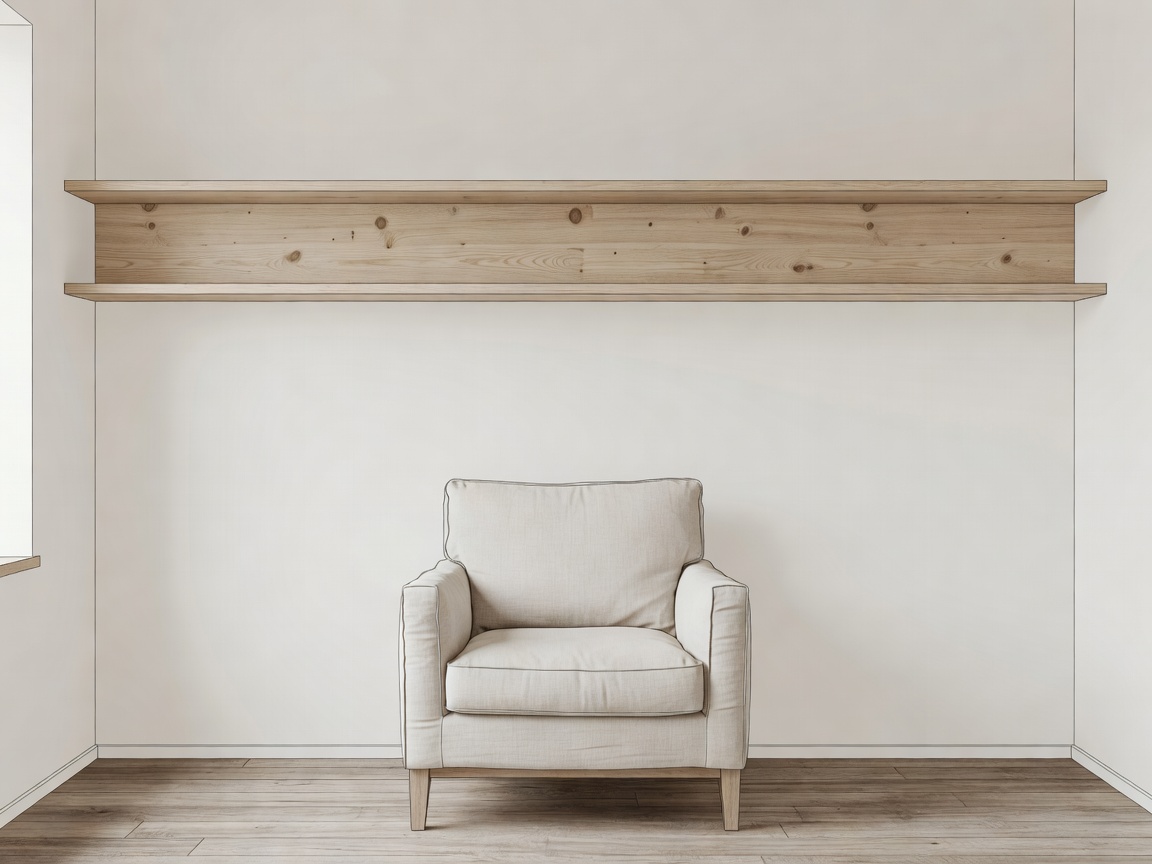
Let one larger element anchor the arrangement: an existing sofa, a timber cabinet or a fireplace that is safe and maintained. Smaller objects can then respond to it. Avoid building the entire room around a photograph’s symmetry. Real cottage rooms may have uneven walls, off-center windows and several competing openings; a balanced arrangement need not be mirrored.
Make neutral colors do different jobs
Neutral is not a single beige. Cream can lean yellow, a grey can feel violet and unfinished timber changes the way both appear. Place physical samples together in the room. Assess them in daylight and under the lamps you intend to keep, rather than relying on screen images or a paint name.
Choose a quiet base and repeat a few related undertones. Then vary surface character: a smooth painted wall, a visible wood grain and a softly woven curtain can create depth without adding a busy pattern. A small dark element often helps define an otherwise pale scheme. Keep sufficient visual contrast for handles, steps and frequently used controls.
Let the bedroom support rest and upkeep
In a bedroom, prioritize comfortable bedding, reachable lighting and storage that can be used without moving other furniture. Keep the approach to the bed clear. A narrow bedside shelf may be more useful than a large decorative cabinet, provided it is safely installed and holds what you actually need.
Choose window treatments for privacy and light control first, then consider texture. Store spare bedding in a dry, ventilated place and avoid overfilling drawers. If an existing wardrobe works, changing its internal organization may solve more than replacing its exterior style. Any tall furniture that needs anchoring should be secured according to its instructions and the wall construction.
Use handmade objects as anchors
A handmade vessel can offer small irregularities of profile and glaze that sit comfortably beside a plain wall. Give it a role: holding utensils, gathering keys or simply providing a focal shape. A display becomes calmer when objects have space around them, but there is no universal correct number to own.
Ask about intended use. Decorative ceramics may not be suitable for food, and a vessel may need a protective liner or tray if it is not reliably watertight. Do not place a damp base directly on vulnerable timber. For food-contact pottery, seek appropriate safety information from the maker rather than assuming that traditional methods guarantee suitability.
Keep the entry and dining area practical
Near an entrance, plan for wet coats, grit and the items you carry every day. A cleanable surface and sturdy hooks may contribute more than another console table. Locate storage so that doors still open freely, and choose fixings suitable for the wall and expected load.
At the dining table, test chair movement and access before adding a sideboard. Use washable table textiles if spills are routine, and protect finishes according to the maker’s guidance. A small room can still contain generous hospitality; folding or extending furniture may help when its mechanisms are sound and its storage is realistic.
Review the room after living in it
Make one change, then use the room before making the next. Notice whether the lamp is switched on, whether the basket gathers useful things or merely hides a backlog, and whether the chair migrates to a better position. Daily behavior offers evidence that a mood board cannot.
William Morris’s writing on useful and beautiful household objects remains a helpful historical prompt, not a command to imitate an Arts and Crafts interior. The enduring lesson is attention. Keep what serves the room, mend what deserves another season and resist adding a new object solely to complete an image. A timeless room can change without starting over.