Begin underneath the surface
A honey-colored top is not a material specification. Stain, printed decoration and clear coatings can make very different constructions appear similar. Ask whether the top, legs, drawer fronts and internal panels are solid wood, veneer over a core, plywood or another board. A single product may use several of these appropriately.
Look beneath the top and inside the drawers. Inspect exposed edges, fixings and joints, but do not rely on a grain pattern alone to identify construction. Well-made veneer can be difficult to distinguish without documentation. If the seller cannot explain the materials, treat that uncertainty as part of the purchase decision.
Compare construction without a hierarchy
Solid timber can often tolerate local repairs and refinishing, but it moves with changes in moisture. A wide tabletop needs construction that allows for this movement. Poorly designed rigid attachments can encourage splitting. Hardness also varies by species: pine generally marks more readily than oak, although the coating and exact use still matter.
Veneer uses a thin layer of wood over a supporting core. It can make efficient use of decorative timber and provide a stable panel, but aggressive sanding may cut through the face. Plywood can be useful for structural components. The relevant question is not which label sounds most traditional; it is whether the assembly suits the task and can be maintained.
Read the evidence of use
For secondhand furniture, examine the piece in good light. Check that chairs and tables do not rack, drawers operate without excessive force and doors close without serious distortion. Look for failed glue joints, water damage, lifting veneer and signs that need professional pest assessment. Surface patina is different from structural weakness.
Older painted finishes may contain hazardous substances. Avoid casual sanding, burning or stripping of unknown coatings, particularly where children may be exposed. Seek appropriate testing and competent advice before disturbing them. For antiques or objects of potential cultural value, a conservator may be a better first contact than a general refinishing service.
Make the sourcing conversation specific
Forest Stewardship Council, or FSC, and Programme for the Endorsement of Forest Certification, or PEFC, provide forestry and chain-of-custody certification systems with different claims and scopes. A reference to certified timber should be supported by the relevant product claim and supplier documentation. Certification is useful evidence, not a complete life-cycle assessment of a chair.
Reclaimed timber also needs a clear story. Ask where it came from, how it was prepared and whether previous coatings or treatments affect its proposed use. “Local” describes distance only when the location and supply chain are stated. It does not automatically establish responsible forest management or low overall impact.
- What species and construction are used in each major component?
- What evidence supports the origin or certification claim?
- Are replacement fittings or repair instructions available?
- Which finish is applied, and what is its maintenance process?
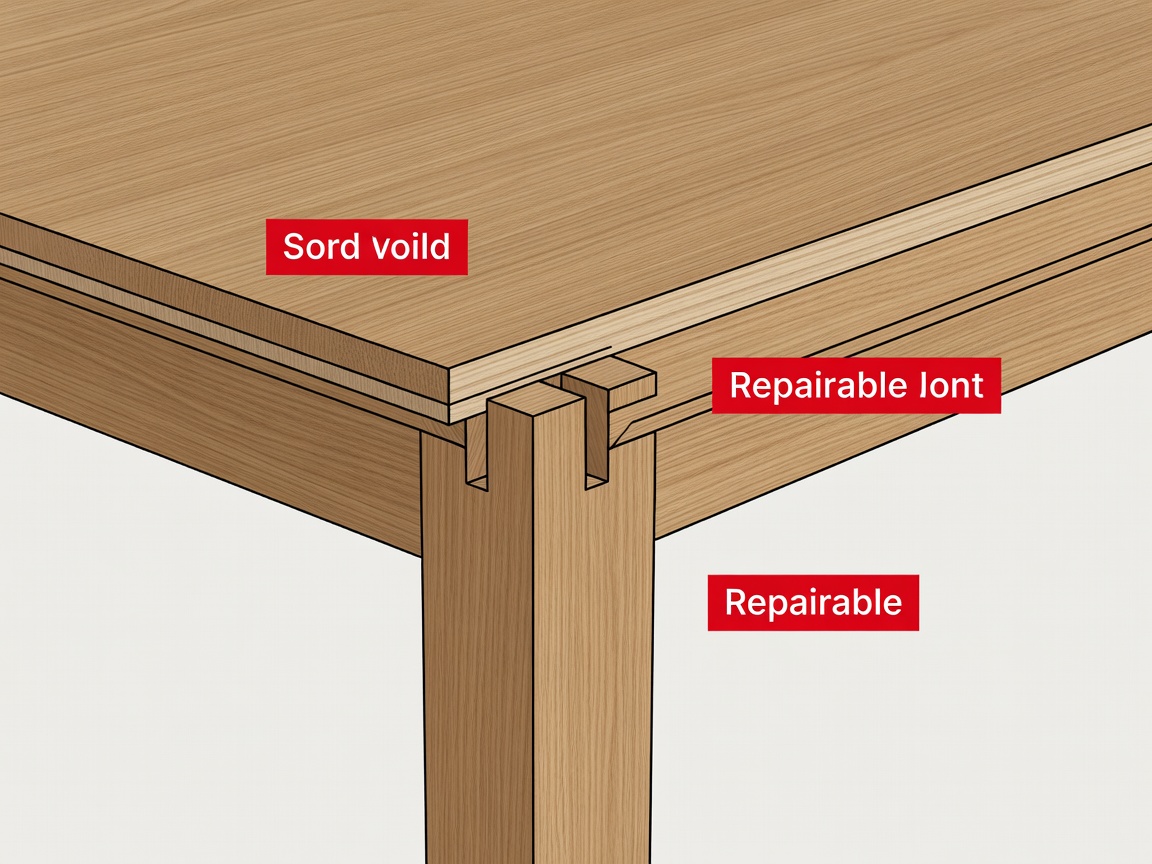
- Can the piece be dismantled without destroying the joints?
Match maintenance to the actual finish
Dust with a soft cloth and use the maker’s cleaning guidance. Do not assume that all timber furniture needs feeding with oil: an existing lacquer may not accept it, and an incompatible product can leave a sticky or uneven surface. Use coasters and protective pads where appropriate, and deal with spills promptly without flooding joints.
Keep pieces away from intense heat and persistent damp. Sudden environmental changes can affect wood movement. If a joint begins to loosen, stop using the piece where failure could cause injury and arrange a suitable repair. Repeatedly tightening an unsuitable screw is not always a solution; it may enlarge the hole or conceal a larger problem.
Choose a role before a silhouette
A small cottage room often benefits more from the right dimensions than from a particular historical style. Measure circulation, drawer travel and the route into the building. Consider whether a table must withstand daily meals, occasional writing or wet plant pots. Those uses call for different levels of surface protection.
A retained family table, a repaired secondhand cabinet and a new piece with documented construction can all belong in a thoughtful interior. Let a limited number of timber tones repeat, rather than forcing every species to match. Durable relationships between objects matter more than an artificially uniform stain.